
Your GEO Strategy Is Failing Three Out of Four AI Audiences

I spent two and a half hours on a podcast about AI search with David Bain, and one conversation kept pulling us back: we talk about 'AI search' as if it's one channel, but ChatGPT, Claude, Perplexity, and Gemini don't share users—they share a category name. The data shows roughly 9 out of 10 domains cited by one platform are invisible to another, which means your entire GEO strategy is probably failing three out of four audiences. This article breaks down exactly what that means for how you should be optimizing for each platform in 2026.
Read next
Your GEO Strategy Is Failing Three Out of Four AI Audiences
Most SEOs treat AI search as a single channel, but the data tells a completely different story. I spent two and a half hours with David Bain unpacking why ChatGPT, Claude, Perplexity, and Gemini don't share audiences—they share a category name. The research is stark: 71% of all cited sources appear on only one platform, and roughly 9 out of 10 domains that Perplexity cites are invisible to ChatGPT users. This article breaks down what that means for your strategy on each platform, because optimizing for the wrong audience isn't a content problem—it's a structural one.
AI Visibility Score
I built LayerScore™ because I kept seeing the same pattern across every audit we ran: sites ranking well in Google but getting crushed by AI Overviews and losing 189,000 impressions a month to zero clicks. SEO alone doesn't cut it anymore. This diagnostic breaks down content visibility across three layers—human readability, search structure, and AI citability—so you can see exactly where you're vulnerable and what fixes matter most. You can score your content in 45 seconds.
How 3LA Got Cited in Google AI Mode Before the Site Was Optimised
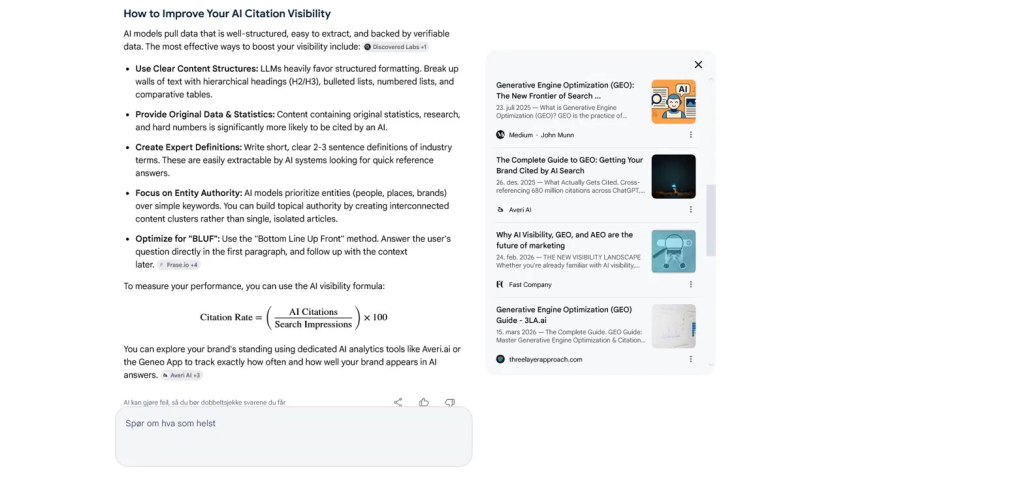
We watched something unexpected happen over 90 days: our Three-Layer Approach framework got cited directly in Google AI Mode while running on an unoptimised JavaScript site with no server-side rendering. The GSC data showed 7,515 impressions growing 11x from February to May, zero clicks, but concrete evidence that AI systems were extracting and attributing our Citation Rate formula and BLUF methodology. This revealed a critical gap in standard analytics — AI citations don't show up in traditional reporting — and proved that structural citeability in your content can survive poor technical infr


Get new posts by email
One email every Friday with the week's new posts. No ads, and you can unsubscribe with one click.