
From Document to Evidence: What Happened When Google AI Mode Found the 3LA Entity Map in 48 Hours

When we published the entitymap page on June 5th — a knowledge graph built specifically for AI retrieval systems to understand — something happened that vindicated everything we've been building toward. Within 48 hours, Google AI Mode was pulling accurate, multi-section responses with correct citations. This piece documents exactly what we saw, why the entity-first architecture made it possible, and what it means for how AI systems will read the web going forward.
Read next

Gemini 3.5 Flash Is Now Google’s Default AI – Here’s What That Means for Your Content
When Google rolled out Gemini 3.5 Flash as the default AI model across Search and Workspace, I watched my own site get thousands of search impressions on Gemini-related queries – with zero clicks. That paradox pushed me to dig into what actually happened: my content ranked because it covered AI optimization topics, but the page titles and structure didn't match what searchers were looking for. I used my Three-Layer Approach framework to diagnose the problem – what I call a Dark Opportunity – and then fixed it using the same methodology I'm sharing here. Within 24 hours, a rewritten page ranked

The Death of the FAQ Shortcut: What Google’s Schema Update Means for AI Citations
When Google quietly removed FAQ rich results from search results in May 2026, most SEO professionals missed what actually happened. This wasn't a random update—it was Google closing the door on a tactic that had become divorced from real user value. I wrote this to cut through the confusion and explain what the Three-Layer Approach reveals: the visual real estate is gone for good, but schema itself isn't dead if you anchor it to actual semantic content. What matters now is whether your structured data serves AI agents reading genuine prose, not hidden JSON fragments hoping to game the algorith
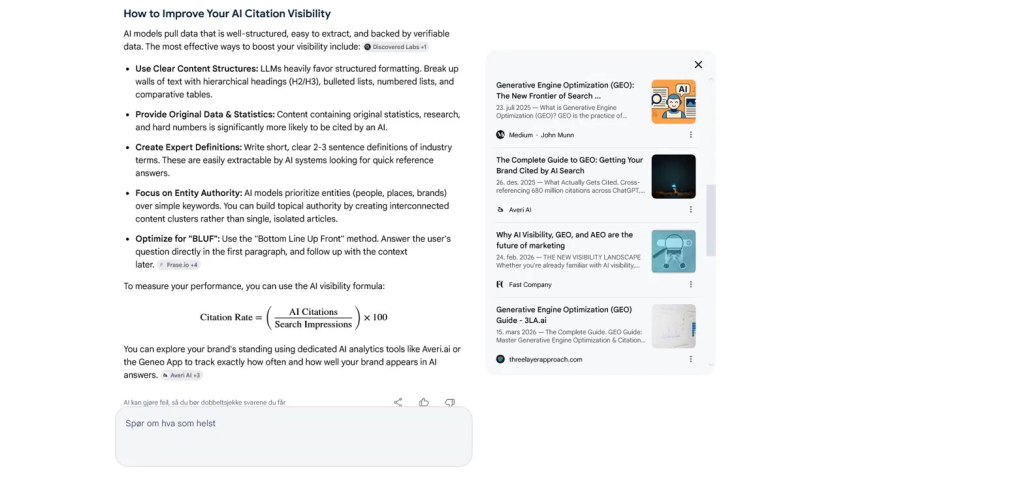
How 3LA Got Cited in Google AI Mode Before the Site Was Optimised
We watched something unexpected happen over 90 days: our Three-Layer Approach framework got cited directly in Google AI Mode while running on an unoptimised JavaScript site with no server-side rendering. The GSC data showed 7,515 impressions growing 11x from February to May, zero clicks, but concrete evidence that AI systems were extracting and attributing our Citation Rate formula and BLUF methodology. This revealed a critical gap in standard analytics — AI citations don't show up in traditional reporting — and proved that structural citeability in your content can survive poor technical infr
Get new posts by email
One email every Friday with the week's new posts. No ads, and you can unsubscribe with one click.